Home › Outdoor Living Masonry
We build outdoor masonry features in Norfolk, VA that transform backyards into usable living spaces. Our services include stone and brick patios, steps, walkways, fire pits, and outdoor kitchens. With careful grading and drainage, we create outdoor areas that are comfortable, attractive, and built to last.
Superior Masonry Norfolk provides professional outdoor masonry features throughout Norfolk, VA, Virginia and the surrounding area. Our licensed, insured crew delivers safe, clean, on-time work with a free estimate before anything begins. Call (757) 448-3225 or request your free quote.
Outdoor masonry features tailored to Norfolk backyards
Outdoor living masonry is about turning the space you already have into something you will actually use. At Superior Masonry Norfolk, we focus on outdoor masonry features that stand up to Hampton Roads weather and match the way you live, not just what looks good in a brochure.
Most projects start with a walkthrough of your yard. We look at how water moves across your property, where the sun hits in the afternoon, and how close we are to property lines and existing structures. In Norfolk, VA, drainage and elevation matter because of our low-lying soils and frequent heavy rain. A beautiful patio that holds water after every storm is a failure, so we design slopes, drains, and base layers with that in mind.
We then talk through how you actually plan to use the space. Some homeowners want a simple paver patio and a small fire pit. Others want an outdoor kitchen with counter space, a built-in grill, and seating walls. We discuss your budget and help you decide where masonry adds the most value. Often it is better to build a smaller, well detailed outdoor masonry feature than to spread your budget too thin over a lot of square footage.
Materials are chosen with local conditions in mind. For patios and pool decks, we often recommend concrete pavers, concrete slab with a masonry overlay, or natural stone like bluestone or flagstone that resists salt and moisture. For vertical features such as seating walls, fireplaces, and outdoor kitchens, we use CMU block or brick with natural stone or brick veneers. We always consider how the materials will handle summer heat, winter freeze-thaw cycles, and the salt in the coastal air.
Design options for outdoor living masonry in Norfolk
Outdoor masonry features can be as simple or as detailed as you want, but the key is planning them as a system, not a bunch of separate pieces. At Superior Masonry Norfolk, we often start with the hard surface where people will walk and sit, then work outward.
Patios are the backbone of most outdoor living spaces. We can install traditional running bond brick, concrete pavers in various patterns, or natural stone laid in random or patterned layouts. For Norfolk homes with smaller yards, we use features like circular or curved edges and soldier course borders to make the space feel larger and more intentional. For waterfront or flood-prone lots, we consider permeable pavers that let water move through the surface instead of pooling.
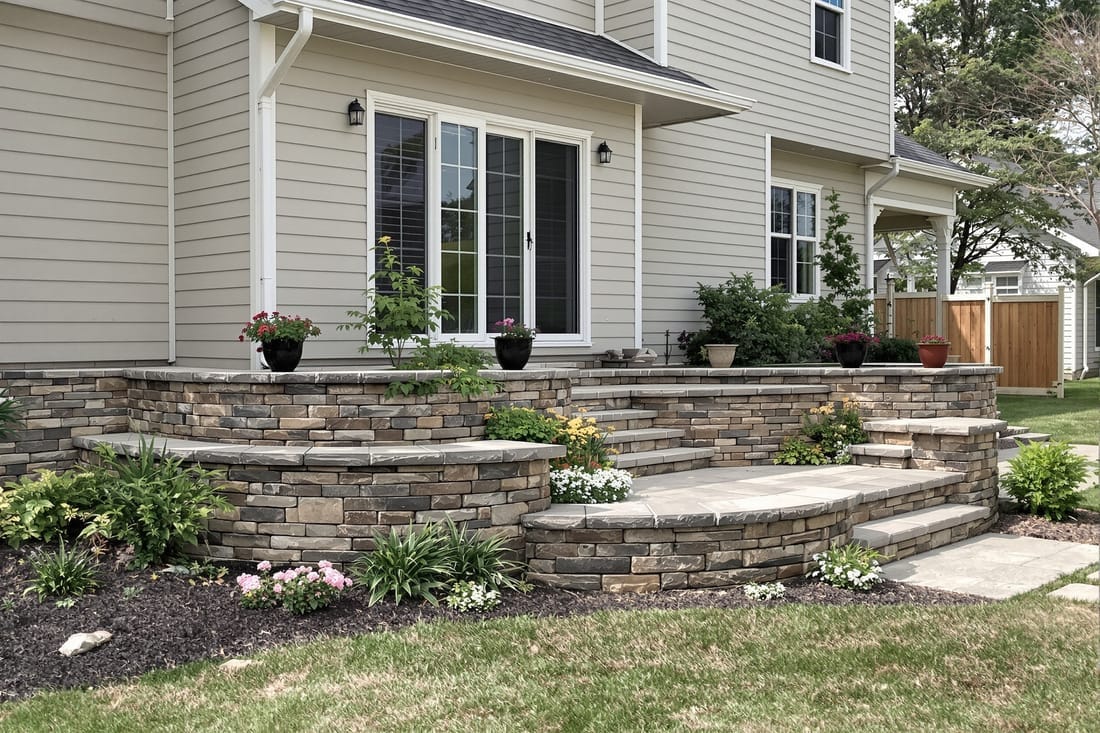
Seating and retaining walls are common add-ons. A low seat wall built from block with stone or brick facing can define the edge of a patio without needing bulky furniture. Retaining walls are important where lots slope toward the house, which happens frequently in older Norfolk neighborhoods. We design these with proper footing, drainage stone, and weep holes so they do not lean or crack as the soil shifts.
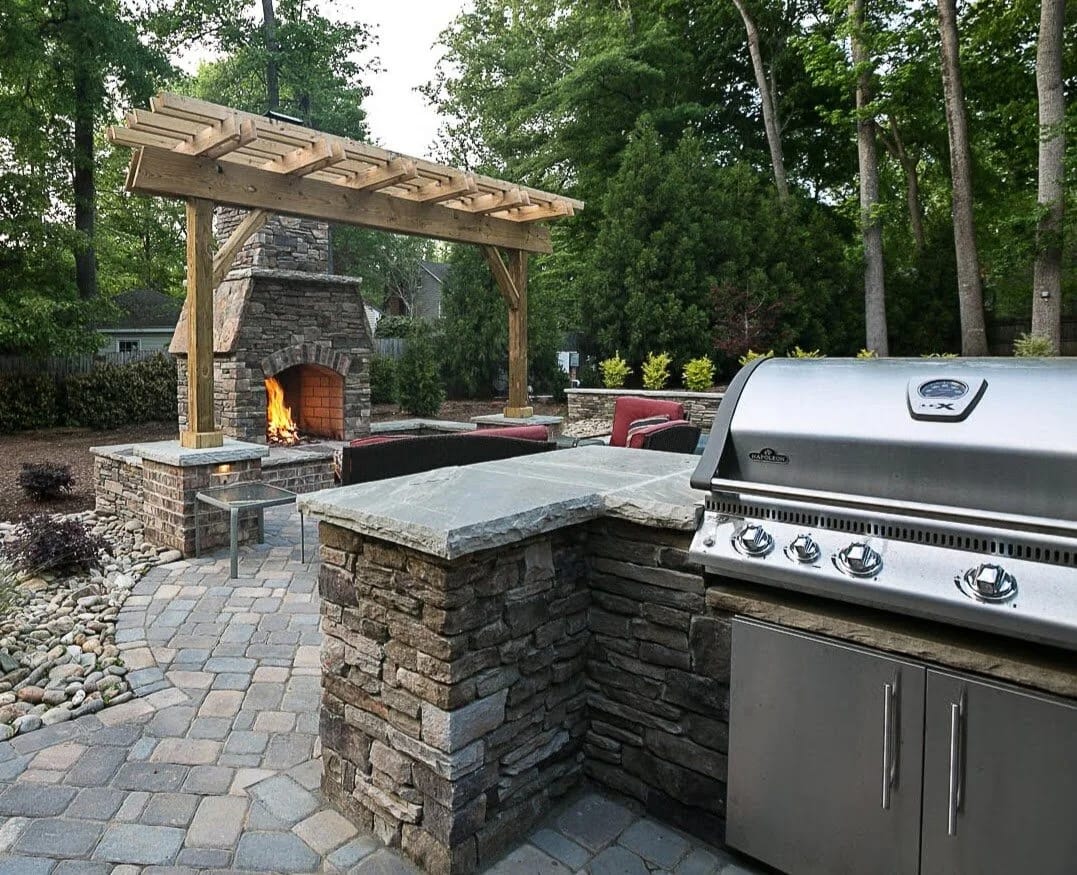
Fire features are another popular piece. Basic options include wood-burning fire pits built from fire-rated block and lined with a steel ring. For more permanent fireplaces or gas units, we coordinate with licensed gas contractors and make sure clearances and chimney heights meet safety guidelines. In windy coastal areas we think carefully about wind direction and nearby structures when placing open flames.
Outdoor kitchens bring more complexity. Masonry bases are typically built from CMU block on a reinforced concrete slab, then finished with stone or brick veneer. Cutouts are created for grills, refrigerators, and storage. We work out venting, access panels, and support for countertop materials like granite or concrete so the whole structure stays solid and safe over time.
How the outdoor masonry process works from start to finish
A successful outdoor masonry project in Norfolk is more about process than quick installation. Superior Masonry Norfolk follows a step-by-step approach so you know what is happening and why.
1. Site evaluation and utilities: We walk the site, review any existing issues like puddling or cracking slabs, and call in utility marking if we are digging. Norfolk properties often have shallow utilities and older lines. Finding these early prevents damage and surprise costs.
2. Layout and grading: Once the design is set, we mark the footprint with paint and string. We check existing elevations and set finished heights so doors will clear, steps meet code, and water runs away from the house. If the yard needs to be cut or filled to create a level area, we plan that before any base materials are delivered.
3. Base preparation: For patios, walkways, and kitchens, we excavate to the depth needed for compacted stone and bedding material. In our climate, this is usually 6 to 10 inches depending on soil and load. We install a geotextile fabric where soils are soft, then place layers of crushed stone, compacted in lifts. A solid base is what prevents settling, loose pavers, and trip edges.
4. Masonry installation: For pavers, we spread and screed a bedding layer, then install units according to the chosen pattern with tight joints and straight lines. For walls and kitchens, we build the structural block first, reinforcing with rebar and concrete fill where needed. Veneers and caps are then tied in for a clean finish.
5. Detailing and cleanup: We cut curves and borders, install joint sand or mortar, and add control joints where appropriate. For fire features, we install fire brick or steel liners and verify clearances. We clean the surfaces with appropriate cleaners and avoid harsh washing that can damage new mortar.
6. Walkthrough and care tips: At the end, we walk the project with you. We point out where water should flow, how to use and maintain your fire feature, and what to watch for after the first heavy rain. We also explain realistic minor movement or hairline cracking that can occur with any masonry exposed to Norfolk’s changing temperatures, and where something would actually need repair.
Costs, timing, and what affects your budget
Outdoor masonry features are custom work, so costs can vary widely. At Superior Masonry Norfolk, we try to explain what drives the price before we move a shovel of dirt.
Size and complexity are the first factors. A straightforward paver patio built on a flat yard is the most budget friendly. Once we add curves, borders, steps, built-in seating, or a kitchen, labor and material hours climb. Tight access in older Norfolk neighborhoods can also increase cost because materials may have to be moved by hand instead of with machinery.
Existing conditions can also add cost. If we have to remove old cracked concrete, rebuild failing retaining walls, or correct drainage problems, that work must be done before new masonry goes in. Installing new work over unstable ground or rotten materials is a short-term fix that will fail early.
Materials influence the budget. Concrete pavers and brick are usually more cost effective than natural stone. Thicker stone, custom cuts, and high-end finishes add both material and labor time. We always provide at least a couple of material options so you can see how choices affect total price.
Timing is tied to our local weather. We can work most of the year in Norfolk, but heavy rain, freezing nights, and tropical systems can slow concrete and mortar work. We try to schedule major masonry phases when temperatures are above freezing at night and rain chances are low enough to protect fresh work. On coastal properties, we also keep an eye on tides and groundwater levels when planning deeper excavation.
Permits and inspections may be required for some features, especially taller walls, gas fireplaces, and large concrete slabs. We explain what is needed in the City of Norfolk or surrounding areas and factor those costs and timelines into the proposal, so you are not surprised halfway through the job.
Common problems, long-term care, and why local experience matters
Outdoor masonry features live in the weather every day, so long-term performance depends on good details. Superior Masonry Norfolk has seen what fails in our area, which helps us build features that last.
One recurring issue is settling and movement. Soft or poorly compacted soils, especially in parts of Norfolk near marshy areas, can cause patios and walls to sink or tilt over time. We address this by excavating to stable subgrade, using the right stone base depth, compacting in layers, and using geotextile separation fabrics where needed. If a homeowner calls us about an existing patio that has settled, we evaluate whether it can be lifted and corrected or must be rebuilt.
Water is another common problem. Without proper pitch and drainage paths, water can stand on patios, run toward the house, or build up behind walls. Behind retaining walls we always install drainage stone and perforated pipe to relieve pressure. On the surface, we plan slopes that are gentle enough to be comfortable but strong enough to move water off the paved area.
Freeze-thaw cycles, salt air, and summer heat also affect masonry. Joints can open, surfaces can spall, and metal components can rust if the wrong materials are used. We choose mortar mixes, sealants, and masonry units that hold up in coastal Virginia. For fire features, we use fire-rated materials so high heat does not crack the structure the first winter you use it.
For maintenance, we give clear, plain instructions. This often includes keeping joints topped with polymeric sand in paver systems, cleaning with mild detergents instead of harsh acids, sealing certain stones if appropriate, and avoiding de-icing products that attack concrete. We also recommend a simple inspection routine after major storms or extreme cold.
Local experience matters because Norfolk properties often combine older construction, variable soils, and frequent heavy rain. A design that works inland might fail here. Our team lives and works in this environment, so our outdoor masonry features are planned around what we know this climate will do, not around ideal conditions that do not exist in the real world.